El mundo del ajedrez
Historia, reglas, gambitos, tácticas, campeones, finales y más.
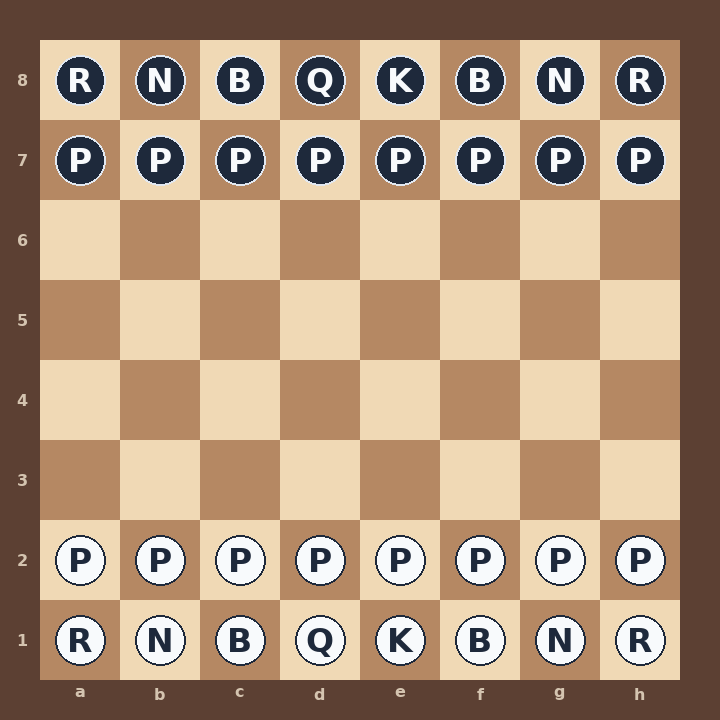
You win by checkmate: the opponent’s king is under attack (in check) and has no legal way out — it cannot move to a safe square, capture the checking piece, or interpose a piece on the line of attack. If there are no legal moves and the king is not in check, the game is stalemate (a draw). Draws also occur by mutual agreement, threefold repetition of the position, the 50-move rule (no capture or pawn move), or insufficient material to force mate (for example bare king vs bare king).
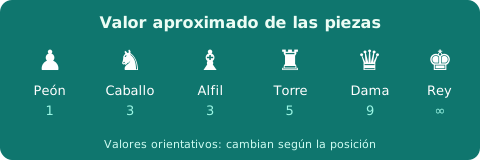
White always moves first. Pieces cannot jump over others (except the knight). You capture by landing on a square occupied by an enemy piece (except en passant for pawns).
- King: one square in any direction. Cannot move into check. Value: invaluable.
- Queen: any number of squares vertically, horizontally or diagonally. The most powerful piece.
- Rook: any number of squares vertically or horizontally.
- Bishop: any number of squares diagonally; each bishop stays on one colour.
- Knight: “L” shape: two squares in one direction and then one perpendicular. Can jump over pieces.
- Pawn: moves forward one square (two from the starting rank); captures one square diagonally forward.
Castling: once per side, if the king and the chosen rook have not moved, the squares between them are empty, the king is not in check and does not pass through or land on a checked square. The king moves two squares toward the rook; the rook jumps to the square the king crossed.
En passant: if a pawn advances two squares and lands beside an enemy pawn, that enemy pawn may capture it “in passing” on the next move only, as if it had moved only one square.
Promotion: a pawn that reaches the last rank must become a queen, rook, bishop or knight of the same colour (usually a queen).
If your king is in check you must resolve it immediately. Leaving the king in check is illegal. In over-the-board play, announcing “check” is optional in many tournaments; online, the interface usually highlights it.
Useful habits for beginners: develop pieces toward the centre, castle early, avoid moving the same piece many times in the opening, and do not rush pawn moves in front of your castled king without a plan.