El mundo del ajedrez
Historia, reglas, gambitos, tácticas, campeones, finales y más.
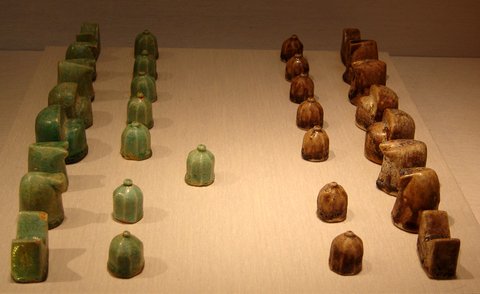
Most historians place the roots of chess in northern India around the 6th century, in a game called chaturanga (“four divisions” of the army: infantry, cavalry, elephants and chariots). It was played on an 8×8 board. The pieces already suggested the roles we know today, though their moves were more limited than in modern chess.
From India the game travelled to Persia, where it became shatranj. Persian and later Arabic literature preserved rules, problems and stories. The word check comes from Persian shāh (king); checkmate from shāh māt — roughly “the king is helpless” or “the king is defeated”.
Europe learned shatranj mainly through al-Andalus and Mediterranean contact. In the Middle Ages the game coexisted with other board pastimes and sometimes appeared in moral allegories. The decisive technical change came near the end of the 15th century, especially in Iberia and Italy: the queen and the bishop gained the long-range moves we use today. The game became faster, more tactical and more “modern”.
That change was not cosmetic. Stronger queens made openings more dynamic, attacks on the king accelerated, and the study of tactical patterns became essential. Chess shifted from a slow endgame-oriented pastime to a field of brilliant combinations as well.
In the 19th century international tournaments and the public figure of the travelling master emerged. In 1886 the first formal world championship is recognized, with Wilhelm Steinitz as champion. The 20th century professionalized chess: federations, rating systems, clocks, coaches and, in 1924, the founding of FIDE (International Chess Federation).
Rivalry between schools — for example the Soviet tradition with its network of clubs and analysis — raised both average and elite level. Individual figures such as Capablanca, Alekhine, Fischer or Kasparov marked eras with unmistakable styles.
In 1997, Deep Blue’s match win over Garry Kasparov symbolized a cultural shift: raw machine calculation could beat the human champion in a formal match. Engines did not kill the pleasure of playing; they transformed it. Today any amateur can analyse games with tools that were unthinkable fifty years ago.
The internet added blitz, bullet, online events and a generation that learns by watching live streams. The 64-square board is the same; access to knowledge has changed. This guide aims to give you a readable map of that knowledge: history, rules, opening ideas, tactics and names worth knowing.